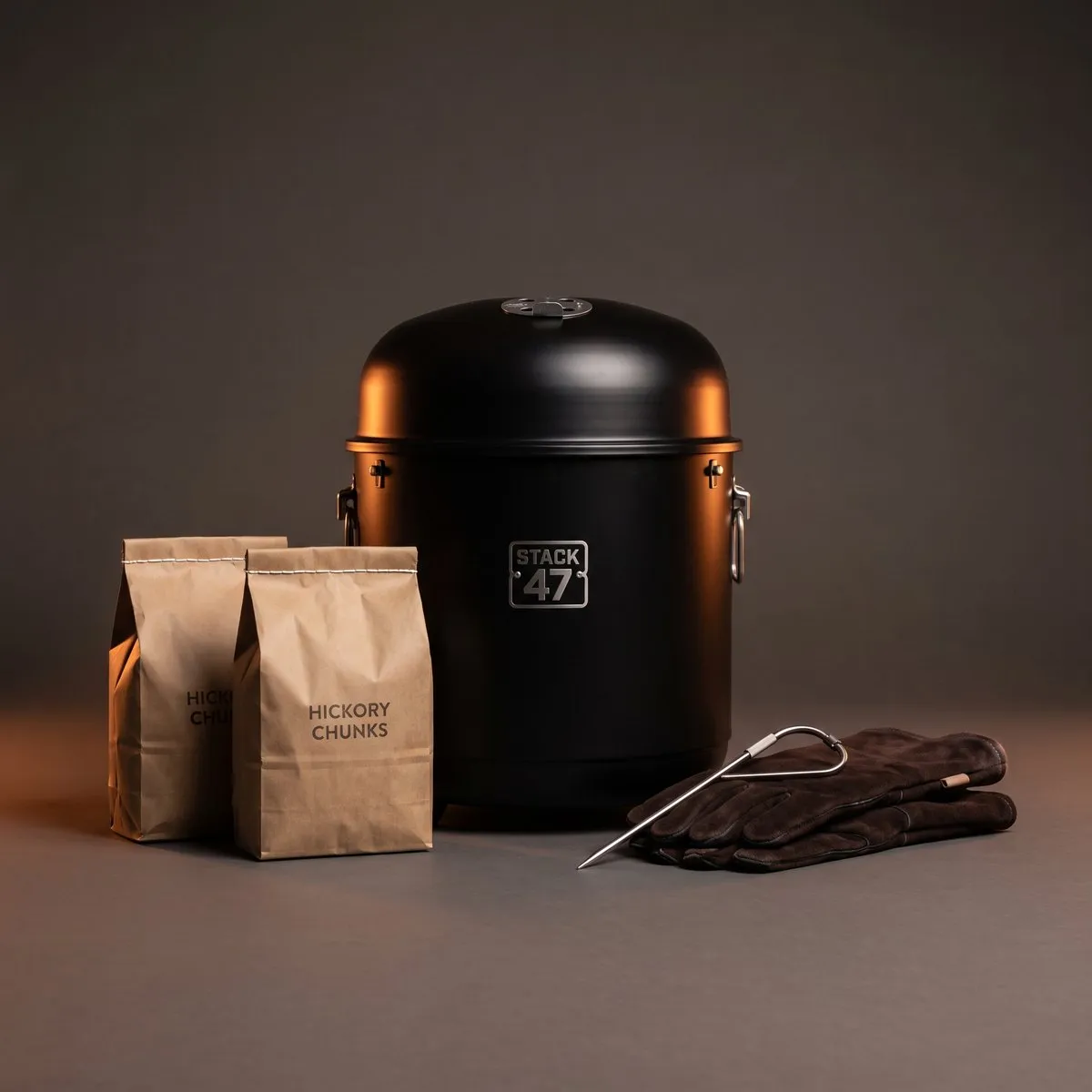
A thick ribeye deserves better than a straight blast over hot coals. Reverse searing cooks the steak gently first, then finishes it hard, giving you an even pink middle and a deep crust at the same time. On a kettle such as the Forge 57 Charcoal Kettle it is easy to set up, and hard to get wrong.
Set up two zones
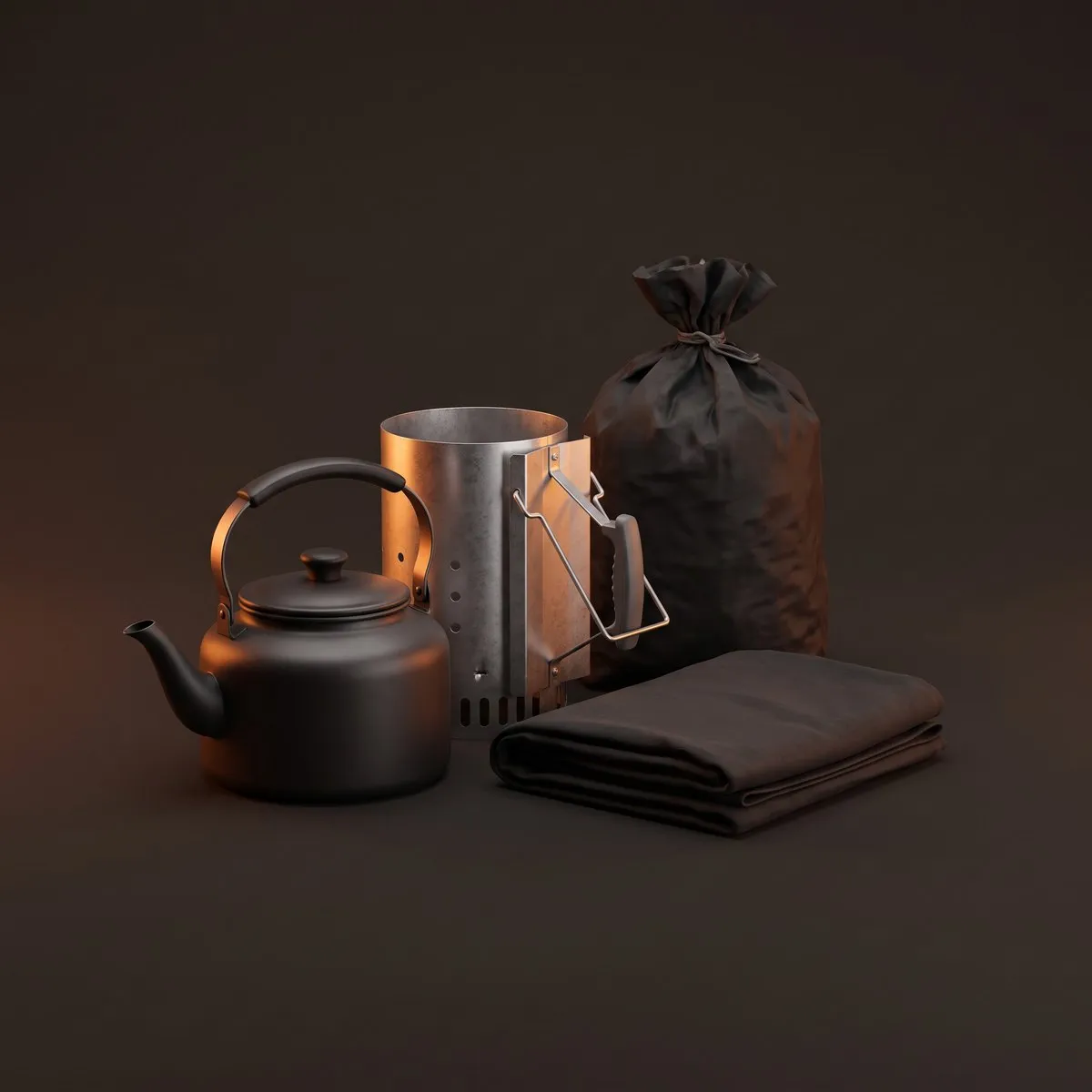
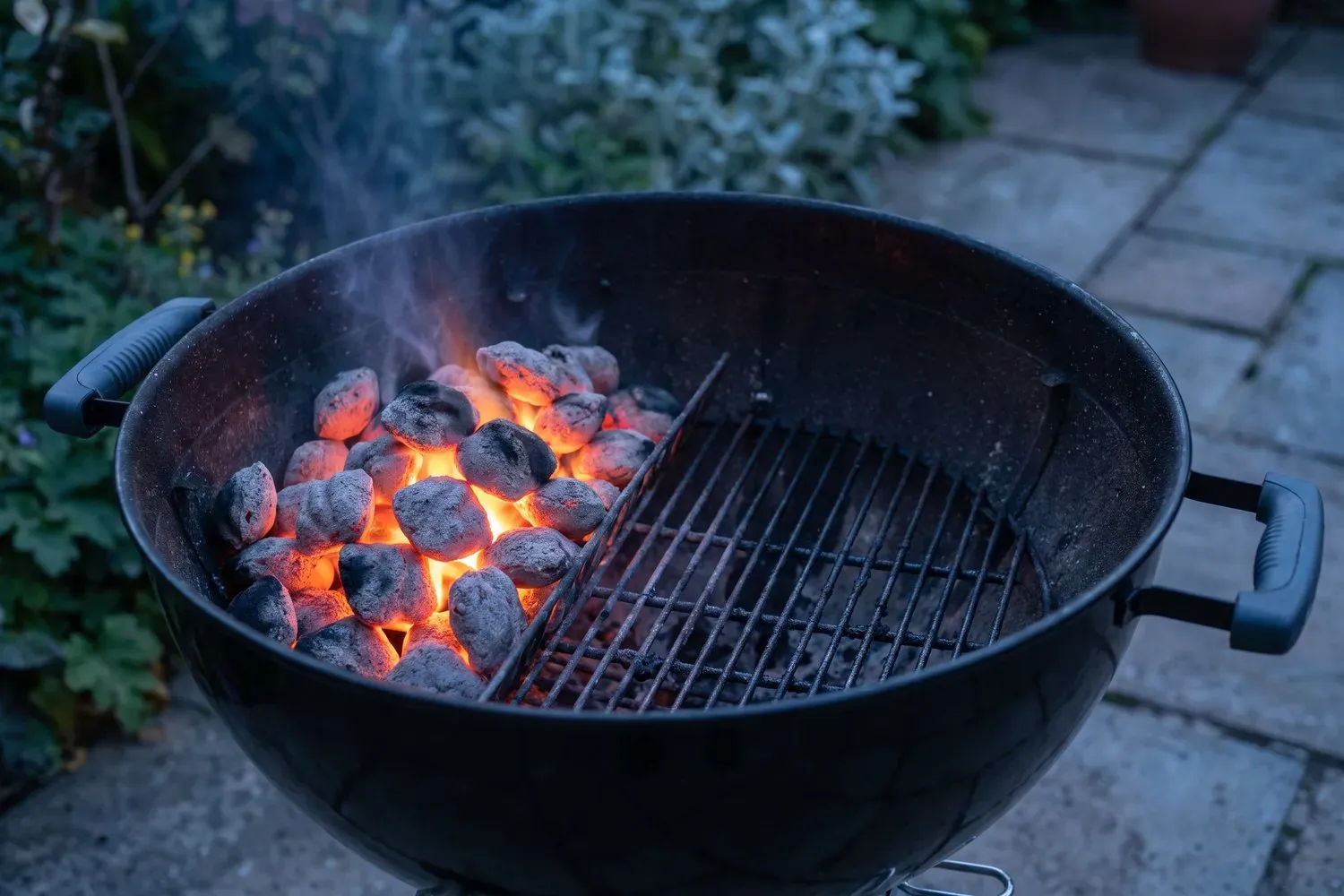
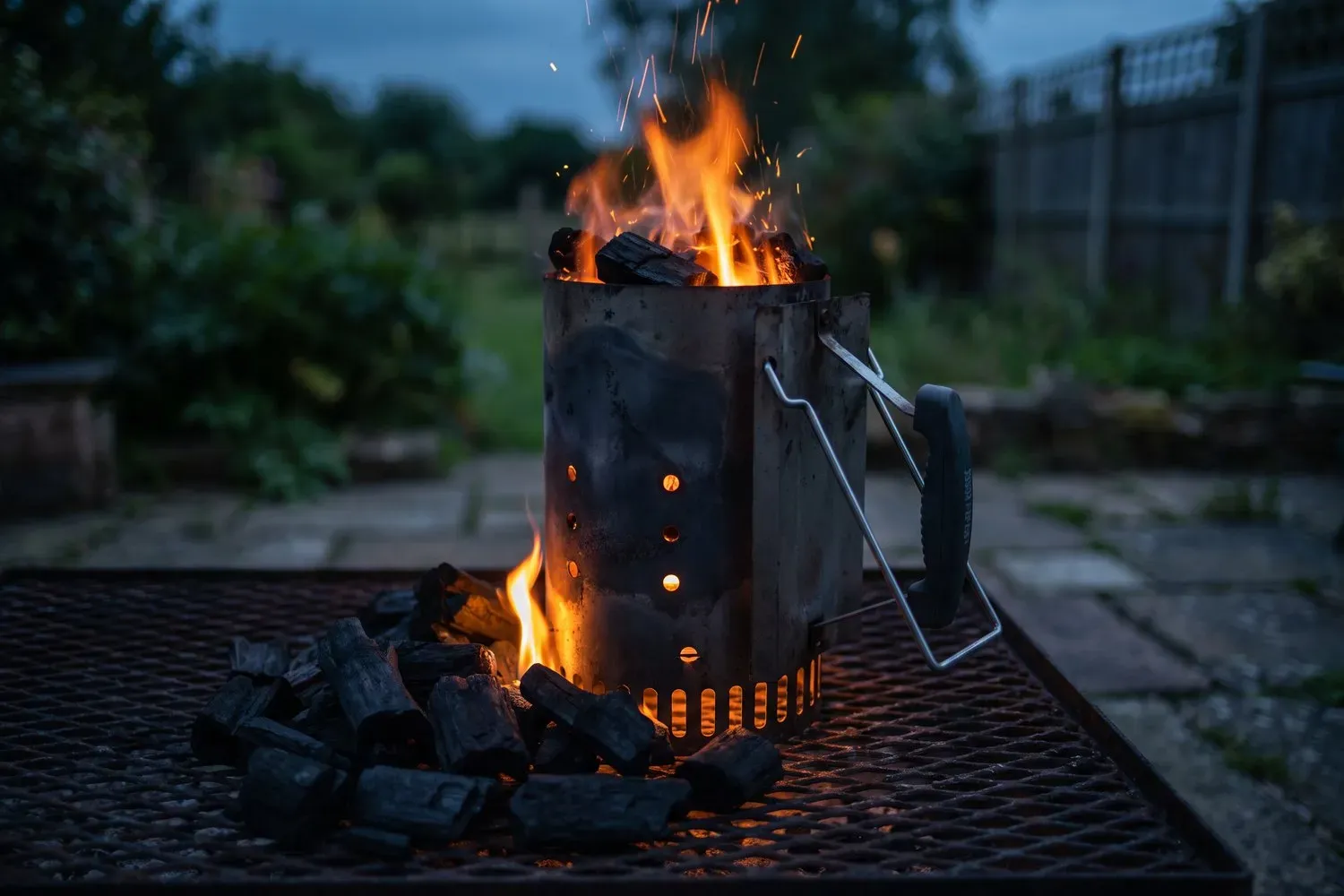
Fill a Chimney Starter with lumpwood charcoal and light it. When the top coals are grey and the flames have died down, usually after 15 to 20 minutes, tip them onto one side of the kettle. Leave the other side empty. Put the lid on with the vents open and let the grate come up to heat. The empty side is your oven, and the coal side is your searing station.
Cook gently first
Aim for an indirect temperature of 110 to 120°C at grate level. Put the ribeye on the cool side, close the lid and cook until the centre reads 45°C on an Instant Read Meat Probe. For a 400 g steak about 4 cm thick that takes roughly 25 to 35 minutes. Turn it once halfway. This stage is what gives you the edge-to-edge pink that no hot-and-fast method can match.
Sear hard
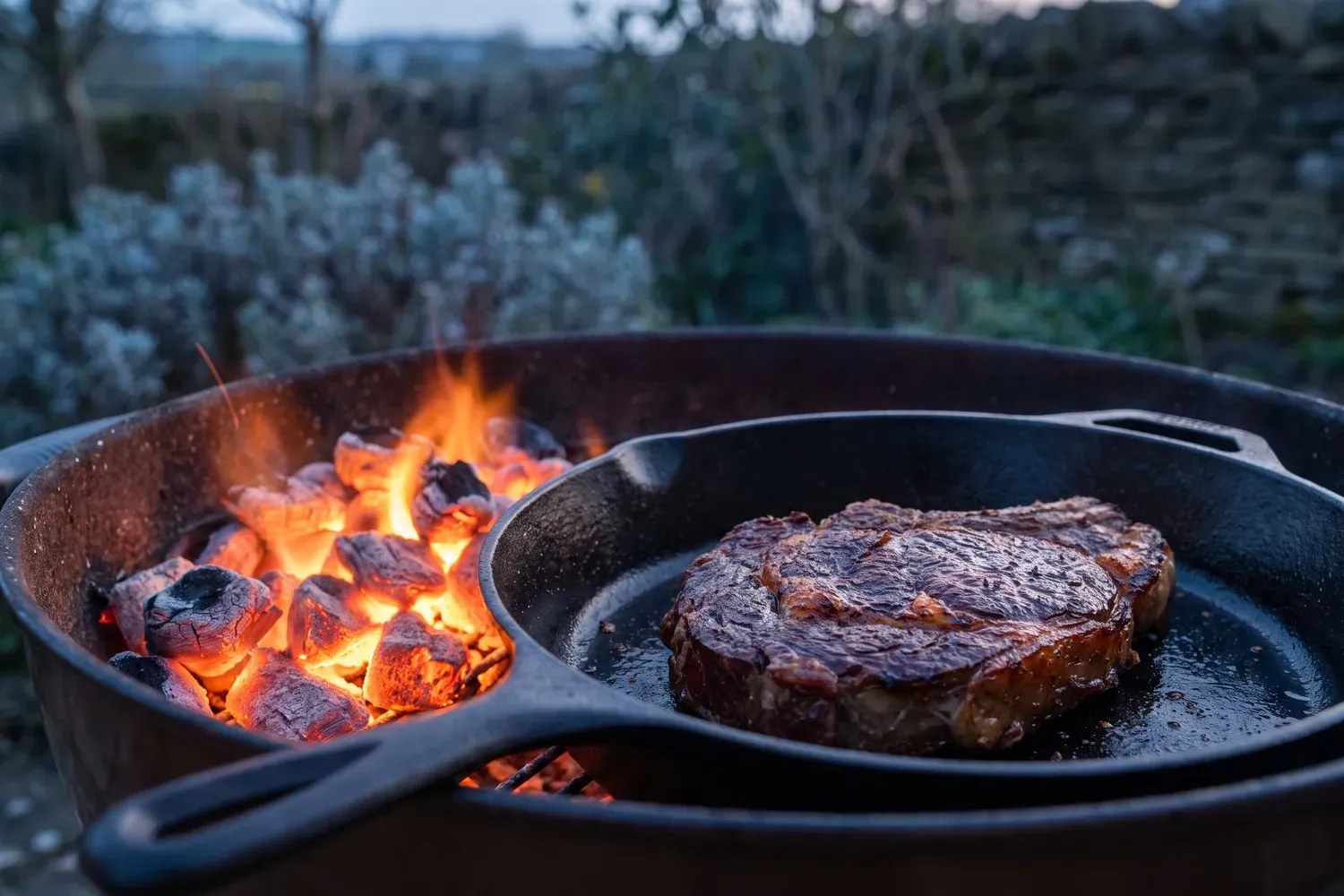
Move the steak over the coals and sear for 60 to 90 seconds a side, turning with tongs. You want a deep brown crust and a little char at the fat edge, not a burnt one. If it flares, move it back to the cool side for a moment, then finish it over the fire. Pull the steak at 52°C for medium rare. Carryover heat will take it up another 3 to 5 degrees while it rests.
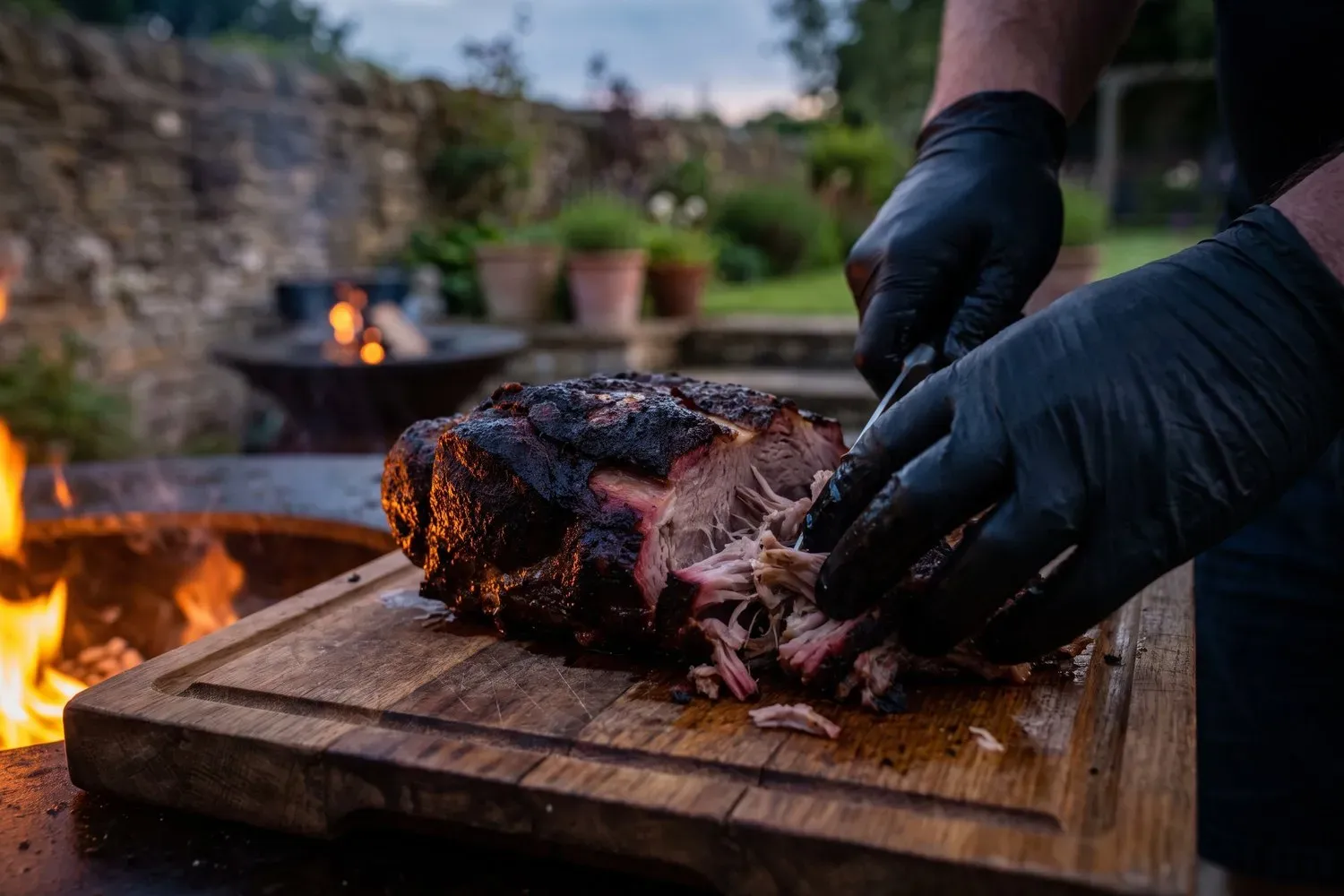
Rest, slice, season
- Rest the steak on a warm board for 8 to 10 minutes
- Slice against the grain into 1 cm slices
- Finish with flaky salt and a knob of butter
- Pour any resting juices back over the meat
Salt earlier if you can, an hour before cooking, and leave the steak uncovered in the fridge so the surface dries. A dry surface sears better. If you like, add a whole garlic clove and a sprig of thyme to a cast iron skillet for the last minute, spooning the foaming butter over the meat. Cast iron holds heat well and gives an even crust, so if you have a skillet to hand, use it over the coals.
Choosing the steak
Ask for a ribeye at least 3 cm thick, ideally 4 cm. A thin steak will overcook before it has a crust, and the whole method depends on thickness. Look for good marbling through the eye of the meat, because that fat keeps it juicy through the gentler first stage. Dry the surface with kitchen paper before it goes anywhere near the kettle. If you are cooking two steaks, leave space between them so they cook evenly and the fire is not crowded.
One probe, one temperature and a little patience are all this needs. Check the meat in two places, because a ribeye is uneven in thickness. Medium rare is 52°C and medium is 57°C. Take it off just before it gets there and let the heat finish the job.